
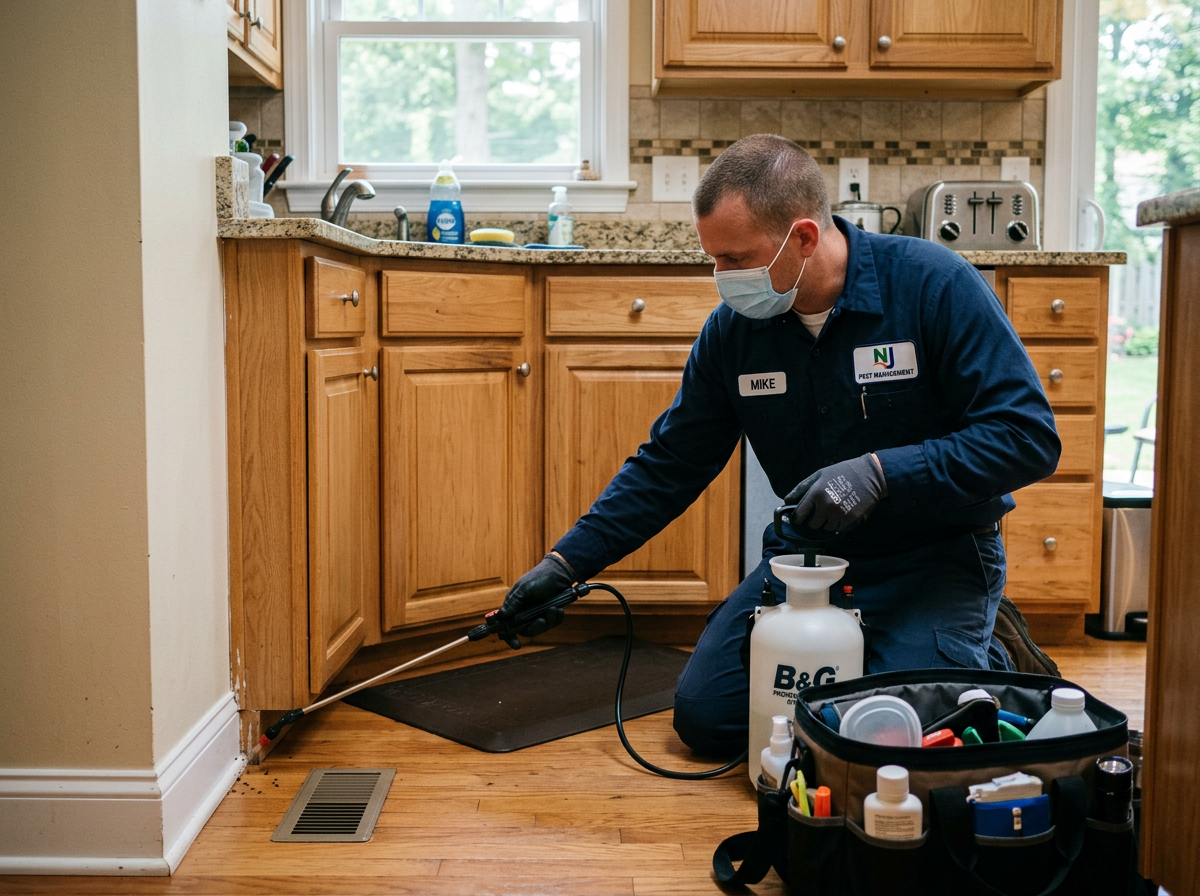
In Parsippany and surrounding towns, ants typically enter through foundation cracks, expansion joints, and utility penetrations in pre-war frame and masonry buildings. Once inside they follow moisture lines behind baseboards and under sinks where they find food residues in shared walls. Baiting works only when the trail leads back to the colony; spraying visible workers often scatters the nest and makes later treatment slower.
Technicians place gel and granular baits along active edges, inside wall voids, and at exterior entry points while avoiding broad residual sprays that can repel ants from the bait. In rowhomes and apartments the job frequently requires treating two or three adjoining units at once because colonies move through shared plumbing chases. Missed satellite nests behind tile or under appliances are the most common reason callbacks occur.
Ant Control Near You — Choose Your City
Every city below has its own local Ant Control page with coverage details.
Monmouth
Ocean
Monmouth County
Ocean County
Bergen
Burlington
Other areas
Union
Morris
Passaic
Camden
Bergen County
Somerset
Middlesex
Middlesex County
Old housing stock with multiple layers of flooring and plaster creates harbourage that liquid sprays cannot reach, so success depends on consistent bait acceptance over several weeks. Seasonal moisture changes in northern New Jersey basements also push colonies upward into living spaces each spring. Homeowners who clean trails aggressively before the first visit often remove the scent the technician needs to locate the source.
Why Ant Control Fails in Dense New Jersey Housing
Missing the exterior entry points around window wells and sill plates allows new foragers to re-enter within days. Treating only the kitchen while ignoring the laundry room or bathroom where the same trail continues leaves the colony intact. In multi-family buildings, skipping the unit below or above means the ants simply shift to untreated space until the original bait is gone.
Technician insight
In Parsippany the thing that catches most people out with Ant Control is the layer of old linoleum and subfloor in 1920s–1940s homes; ants nest between the layers and the only way in is through the toe-kick under the cabinets. Homeowners often seal the visible gap at the wall before we arrive, which forces the colony deeper and delays bait acceptance by weeks.
Rowhome kitchen trail that crossed three units
Homeowner reported persistent small ants in the kitchen sink area of a 1938 Parsippany rowhome. Inspection found the trail entering from the unit below through a shared plumbing chase behind the dishwasher. Bait stations were placed in both units and along the exterior foundation; activity stopped after the second visit once the colony accepted the bait in the wall void.
Ant Control Services We Offer
✓Kitchen Ant Treatment
Locates and baits trails from cabinets, behind appliances and under sinks where most household ants forage in older Parsippany homes.
✓Carpenter Ant Control
Targets satellite nests in moist wood around window frames, porch columns and roof leaks common in pre-war New Jersey frame houses.
✓Pavement Ant Treatment
Addresses colonies nesting under sidewalks, driveways and foundation slabs that enter through expansion joints in rowhomes and multi-family buildings.
✓Multi-Unit Ant Treatment
Coordinates bait placement across adjoining apartments so colonies cannot move through shared walls and plumbing chases.
✓Exterior Perimeter Baiting
Places weather-resistant bait stations at foundation cracks and utility entries to reduce new ants entering from the yard.
How it works
- 1
Inspection and Trail Mapping
Technician follows active ants to locate entry points, moisture sources and possible nest locations inside walls or under slabs.
- 2
Bait Placement
Gel and granular baits are applied along trails, in voids and at exterior entry points chosen for acceptance by the target species.
- 3
Adjoining Unit Coordination
When needed, treatment extends to neighboring units in multi-family buildings to prevent the colony from shifting through shared walls.
- 4
Follow-Up Monitoring
Return visit checks bait consumption and places additional stations until activity stops, usually within two to four weeks.
Pricing
Colony count, whether carpenter ants have got into structural timber, and how much of the perimeter needs treating all change the work involved. We inspect first, then give you a firm price before any work begins. Call (973) 576-8942 to get a quote for your property.